
MOVEBR Project Lifecycle from Planning to Completion
Originally published 7/15/25
Understanding the lifecycle of a road infrastructure project can help inform stakeholders of what to expect during construction. Each project goes through a series of phases with defined milestones, objectives, and approval intervals to reduce risks and delays and ensure the project is ready to be constructed. The timeline from final design completion through construction completion depends on factors such as how much right of way must be acquired, conflicts with utilities, funding availability and project complexity.
Planning
The journey begins with the planning phase. This is where projects are prioritized based on various factors such as traffic congestion, safety, and infrastructure needs. During this stage, the groundwork is laid out for selecting a design consultant who will help bring the project to fruition and coordinating resources and partnerships to ensure the project receives the appropriate level of funding.
Design
Once a project moves past the planning stage, it enters the design phase, which is initiated by the selection of a design consultant through the Engineering Procurement process. Once a professional engineering firm is selected to serve as the project’s design consultant, they will work in tandem with the Program Management Team to consider all factors impacting the project. The team is tasked with implementing engineering principles to design roadway improvements that will mitigate traffic congestion, pedestrian & motorist safety and accessibility, and overall infrastructure improvement.
The team compiles design options and alternatives in an initial report called a Design Study. These design options, or alternatives, are then presented to community stakeholders for review at a scheduled open house meeting. Once the design study is released and a final alternative is selected based on stakeholder input, the team begins the final design process. This process includes preparation of construction plans to be used during advertisement for a construction firm to construct the project.
A project remains in the design phase until the design consultant has finalized right-of-way maps, showing current right-of-way boundaries and potential areas along the project path that may need to be acquired. If land is required, then the right-of-way (ROW) acquisition process commences.
Right-of-Way (ROW) Acquisition
Right-of-way refers to an area of land that allows access to the public and/or public service entities to travel, house or erect infrastructure needed to provide or offer resources to the public, such as a roadway. It is important to note that MOVEBR projects not only consider current traffic infrastructure needs but also consider future trends so that the roads built today are sufficient for years to come.
ROW acquisition involves the negotiation and purchase of a specific portion of land for use as part of a public infrastructure or private utility project. This land is needed for installing or expanding roads, railways, pipelines, or utilities.
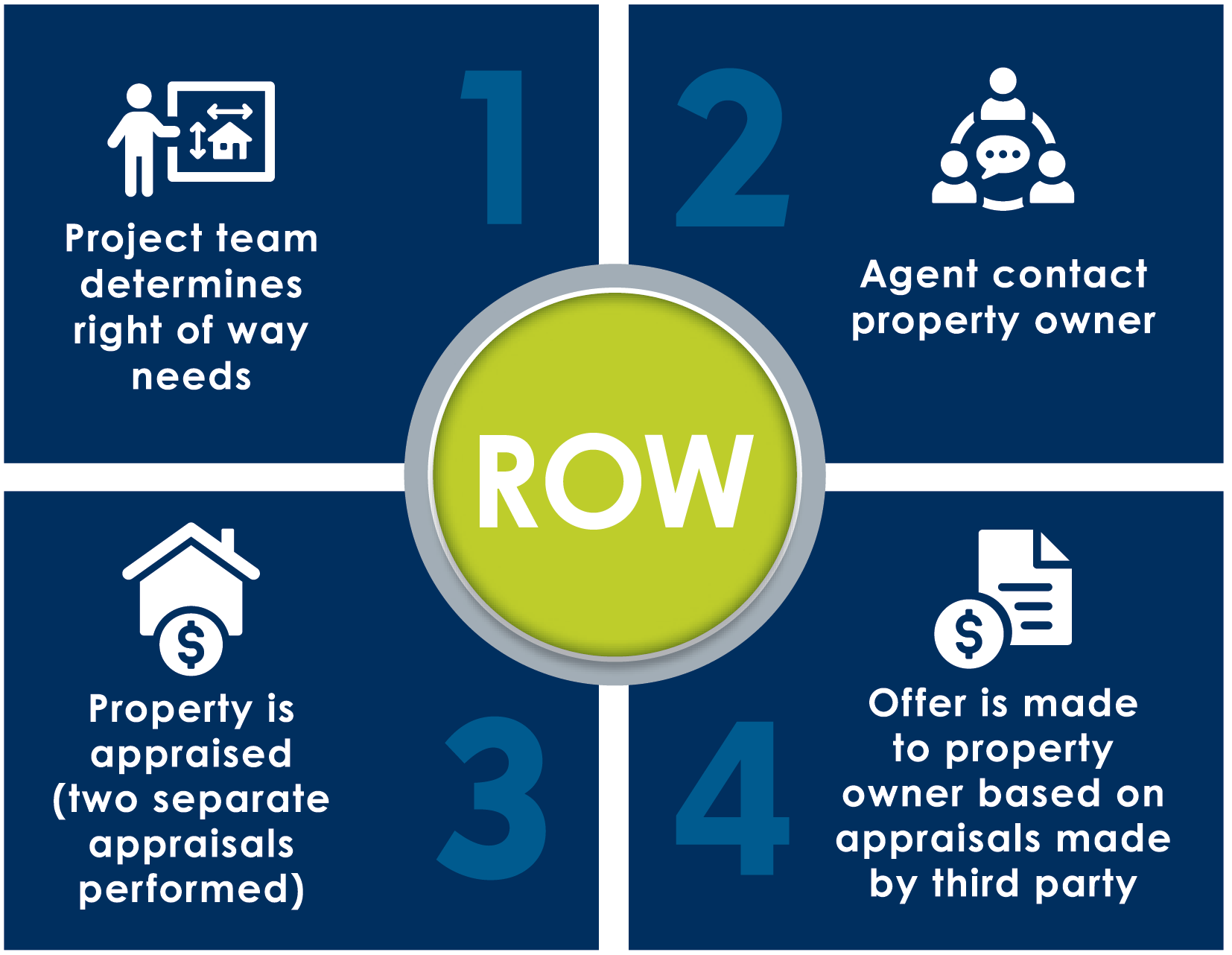
The MOVEBR ROW acquisition process includes several steps:
Utility Location & Coordination
To accommodate impending construction the program must coordinate with utility companies to relocate or adjust their existing utility locations. This ensures that utilities such as water, gas, internet, and electricity lines are permanently, or temporarily, moved to a new location which aligns with the new road design, minimizing disruptions during construction.
Construction
The final phase is the construction of the project, like design, begins with the Contractor Procurement process. The final design is packaged for bid and outlines all the requirements and materials the contractor must abide by to successfully construct the project. Selection is made by determination of the lowest “qualified” bidder. Once the lowest bidder receives Notice to Proceed from the Chief Engineer, the project is ready to construct.
Construction involves the physical building of the infrastructure project based on the approved 100% design plans. This phase is where the vision becomes a reality, and residents can see tangible improvements in their community.