
Understanding the Roadway Construction Process for MOVEBR
Approximately ten Capacity and Corridor Improvement projects are slated to began in-field operations or active construction operations in 2026; of these projects eight will include improvements to existing roadways while the others are greenfield projects, meaning a new roadway will be built where none previously existed. These projects, and many of those to come in following years, are located in key corridors and communities within the Parish, and stakeholders are sure to see more MOVEBR construction activity than in previous years.
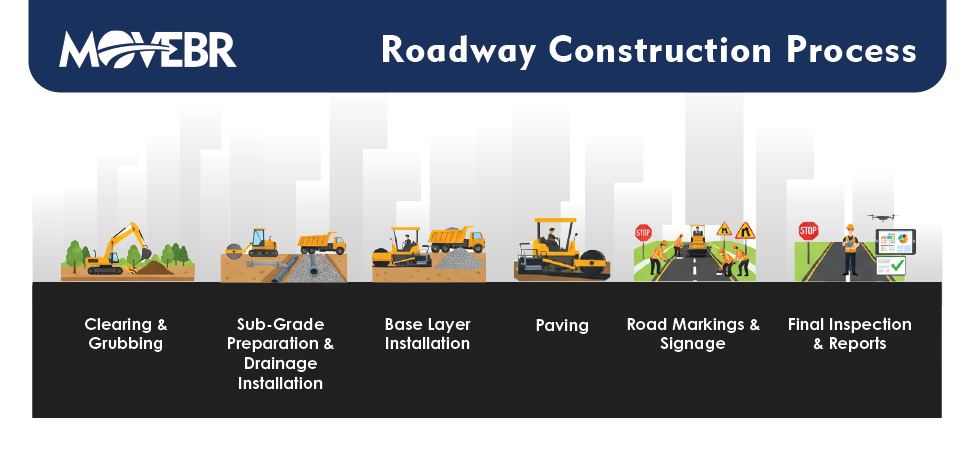
Building better roads is a complex process that involves multiple stages, each critical to ensuring safety, durability, and efficiency. While smaller Community Enhancement projects may take only a few months to complete, a typical Capacity or Corridor Improvement project can take a number of years to complete once construction begins. Here’s an overview of the six typical phases involved in roadway construction under the MOVEBR program:
Phase 1: Clearing & Grubbing
When construction starts, construction crews clear vegetation, structures and obstacles from the surface. Grubbing follows clearing, completed by the same contractor, and involves the removal of roots, stumps, and other underground vegetative obstacles. This step begins only after all required right-of-way is secured.
Phase 2: Sub-grade Preparation & Drainage
Next, the sub-grade layer, the bottommost layer consisting of natural soil on which the roadway will be built, is prepared. Preparation includes stabilizing the soil as needed with binding materials, such as lime, cement, and/or asphalt to increase strength. Some projects may require additional site preparation which might involve the movement, removal, addition, and reshaping of soil and rock materials to ensure the proper grade and compaction in the area where a road will be built.
Drainage systems, both surface and subsurface, are installed to prevent water accumulation on the roadway, run-off to lower lying areas, erosion of embankment. These systems also help control water infiltration into the subgrade layer and reduce moisture underground, ensuring long-term road integrity.
Phase 3: Base Layer Installation
A layer of aggregate material (stone or gravel) is added to provide structural support and distribute traffic loads evenly.
Phase 4: Paving
Multiple layers of asphalt or concrete create the smooth driving surface we all expect. This is one of the most visible stages of construction.
Phase 5: Markings & Signage
Lane striping, crosswalks, and traffic signs are installed. MOVEBR follows Parish’s Complete Streets policy, ensuring safe access for drivers, cyclists, and pedestrians.
Phase 6: Final Inspection
Engineers conduct thorough checks to confirm safety and design compliance during each phase and before opening the roadway.
Why It Matters: Each phase is carefully planned to minimize disruptions and deliver a roadway that meets the highest standards of quality and safety, which reduces the likelihood of failure and maintenance costs in the long run. While timelines can vary based on project size, weather conditions, and unforeseen circumstances, understanding the process helps stakeholders stay informed, engaged, and manage expectations regarding project completion.